

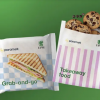

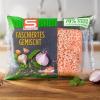

Fiber-based food packaging is expected to increase its share of the global packaging market from 37% today to 42% by 2045, according to a study conducted by UPM Specialty Materials in collaboration with Smithers. The research draws on insights from more than 230 packaging professionals representing the entire packaging value chain.
According to the survey, 71% of respondents believe fiber-based materials will become the most sustainable choice for food packaging. This shift is expected to be enabled largely by advances in barrier coating technologies, allowing fiber to replace plastic in applications that have traditionally relied on polymer-based materials.
"We are encouraged by the strong momentum behind fiber-based packaging, driven by evolving regulations, consumer demand and innovation in barrier technologies," said Janne Varvemaa, Director, Products and Technology at UPM Specialty Materials. "Our goal is to support customers through this transition with sustainable, high-performance solutions that deliver the functionality required by modern food packaging."
The study also points to a major shift in the regulatory landscape. Seventy-one percent of respondents believe sustainability will become a regulatory requirement rather than a competitive differentiator, while 88% expect stricter environmental legislation to have a significant impact on future material selection.
Extended Producer Responsibility (EPR) schemes and eco-modulation mechanisms are expected to play an increasingly important role, rewarding recyclable packaging solutions while placing greater financial pressure on materials that are more difficult to recover at end of life.
On the recycling front, the report forecasts that the global recycling rate will increase from an estimated 31% in 2030 to 37% by 2045. However, landfill and waste-to-energy incineration are still expected to account for a significant share of waste management, particularly in countries where recycling infrastructure remains underdeveloped.
Regional differences are also expected to persist. Europe is forecast to maintain its leadership in recycling performance, while North America and the Asia-Pacific region will face distinct regulatory and infrastructure challenges.
"The industry will continue to focus on improving recycling rates and adapting to evolving regulations," said Ciaran Little, Vice President, Global Consulting Information Division at Smithers. "EPR schemes and eco-modulation are already influencing material choices, while advances in barrier technologies are opening up new opportunities for fiber-based packaging to compete with plastic alternatives."
The report concludes that transforming fiber-based packaging from an alternative solution into a mainstream technology for food applications will require accelerated investment in innovation and large-scale development worldwide.


