




Comieco report: over 88% of service items in McDonald’s restaurants are paper-based, with an 87% recycling rate
In Italy, quick-service restaurants account for around 11% of the commercial foodservice sector and 9% of out-of-home consumption, according to FIPE. Within this context, paper – a renewable resource – has become a key material thanks to its recyclability and its widespread use in foodservice items. This results in significant volumes that can be recovered, provided that effective collection systems and responsible practices are in place.
Against this backdrop, Comieco (the National Consortium for the Recovery and Recycling of Cellulose-Based Packaging) commissioned a study conducted by Ambiente Italia. The research examined waste generation and management in seven McDonald’s restaurants located in Milan, Baranzate, Parma, Perugia, Rome, Bari and Palermo. It also involved direct observation of around 1,000 customers, focusing on how trays were sorted into separate waste bins and verifying the actual flow of collected materials.
The results were presented in Rome on 11 June, with contributions from representatives of public institutions, industry and the recycling value chain, including Sabrina Alfonsi (City of Rome), Duccio Bianchi (Ambiente Italia), Elisa Carlino (McDonald’s), Amelio Cecchini and Roberto Di Molfetta (Comieco), Bruno Manzi (AMA Rome), Antonio D’Amato (Seda International Packaging Group), as well as Members of the European Parliament Annalisa Corrado, Pierfrancesco Maran and Massimiliano Salini (ENVI Committee).
The discussion focused on the current situation, already considered highly positive, and on opportunities to further improve waste collection and recycling systems in the quick-service restaurant sector. As Roberto Di Molfetta, General Director of Comieco, noted: “There is still room for improvement,” particularly through better material sorting and more efficient local collection services".
84% of waste is collected separately
“The data show that the system in place in McDonald’s restaurants performs better than the national average: 84% of total waste is sorted into separate collection streams, compared with 68% in municipal waste management,” said Duccio Bianchi, co-founder of Ambiente Italia. “The overall recycling rate is also higher, reaching 67% versus a national average of 54%.”
This performance is driven by an organisational model based on multiple sorting stations inside restaurants, clear signage, and separate streams for paper, plastics and metals, glass, organic waste and residual waste. Sorting errors remain limited: only about one in ten customers disposes of waste incorrectly. “Improving the visibility of organic waste bins could further enhance results,” Bianchi added.
Paper at the core of the circular transition
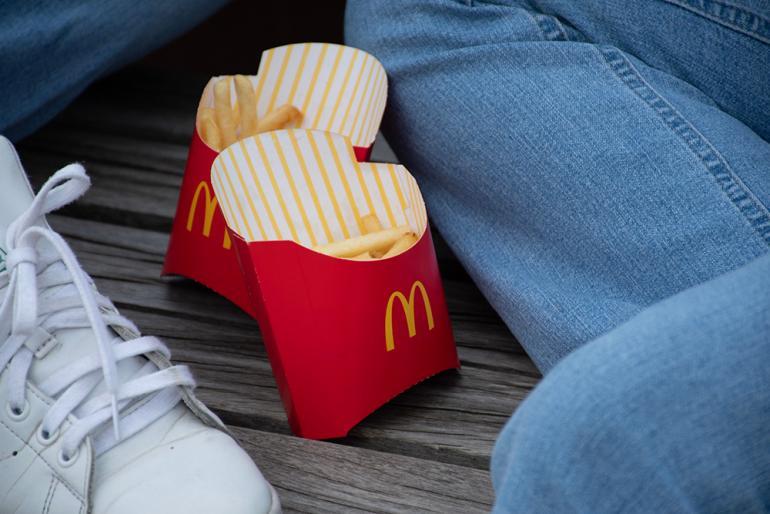
The study highlights the growing adoption of cellulose-based materials. More than 88% of packaging and service items – such as napkins, straws, tray liners and containers – are made of paper. Of these, nearly 70% are fully cellulose-based, while the remainder combines paper with other materials but remains highly recyclable.
“The data confirm the effectiveness of the model: the recycling rate for paper packaging in the surveyed restaurants reaches 87%, showing the strategic importance of continuing to invest in this renewable, recyclable and recycled material,” said Roberto Di Molfetta, General Director of Comieco. “Further improvements require attention across the entire chain: from customer sorting behaviour to staff handling, from adequate waste collection frequency to stronger logistics. This would increase paper recovery and reduce residual waste. In principle, the quick-service restaurant system could even eliminate residual waste entirely.”
Antonio D’Amato, Chairman of Seda International Packaging Group, also highlighted McDonald’s approach and the central role of paper packaging: “McDonald’s engages consumers and makes them part of the waste management process,” he said. “Italy, which leads Europe in separate waste collection, has built one of the world’s most advanced circular economy systems over the past thirty years. Packaging is not an accessory, but a fundamental tool for protecting health and reducing waste, including the significant share of food loss and water waste globally.”
Key challenges ahead
Despite the strong results, the study also identifies areas for improvement. The main issue remains sorting accuracy: around 14% of material placed in the paper stream actually belongs to other waste fractions. In addition, separate collection is not yet evenly implemented across the country and is not always properly applied in all outlets. In many municipalities, collection services still need strengthening, particularly in terms of frequency.


