





Amcor’s recycle-ready AmPrima flexible packaging solution for shredded cheese has officially entered the market with Fonterra Oceania, marking a concrete shift from multi-material laminates to mono-material structures in one of the most complex formats in food packaging.
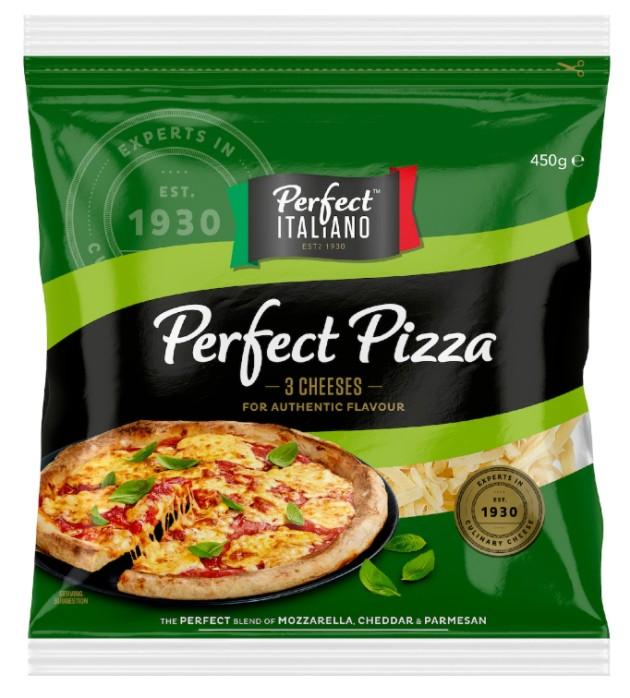
The new pack, already awarded two 2026 WorldStar Global Packaging Awards, is now used across the dairy group’s retail and foodservice lines. In the Australian market, the solution is applied to Perfect Italiano shredded cheese packs and features the “Check Locally” label under the Australasian Recycling Label scheme, in line with local guidelines for soft plastics recycling in Australia. According to Fonterra, the transition to the new packaging represents an operational step toward its packaging sustainability targets: replacing traditional multi-material laminates is expected to remove around 270 tonnes per year of non-recyclable material from the Australian market, without compromising product protection, pack integrity or shelf appeal.
Technical performance and production continuity
Shredded cheese packaging is traditionally considered one of the most demanding applications for flexible packaging, requiring high oxygen and moisture barrier properties, reliable sealing performance and compatibility with high-speed production lines. AmPrima meets these requirements through a mono-material polyethylene film engineered to deliver performance equivalent to traditional multilayer structures, while maintaining existing production processes and consumer functionality. The solution was developed through collaboration between Amcor’s Asia Pacific and North American teams, highlighting an increasingly global approach to materials innovation in flexible packaging.
Design for recycling gains momentum in the dairy sector
The commercial rollout with Fonterra Oceania confirms a broader trend in the dairy sector: the shift from complex laminated structures toward materials designed for recycling. In a context where soft plastics management infrastructure is still developing, solutions compatible with existing collection systems represent a key step in the transition toward circular economy models in food packaging.


